The ink is never completely dry.
On wars, peace, and the lessons of history.
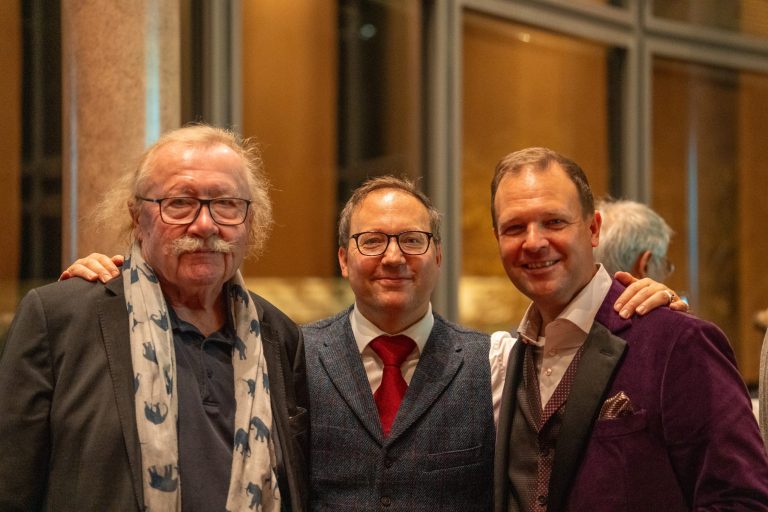
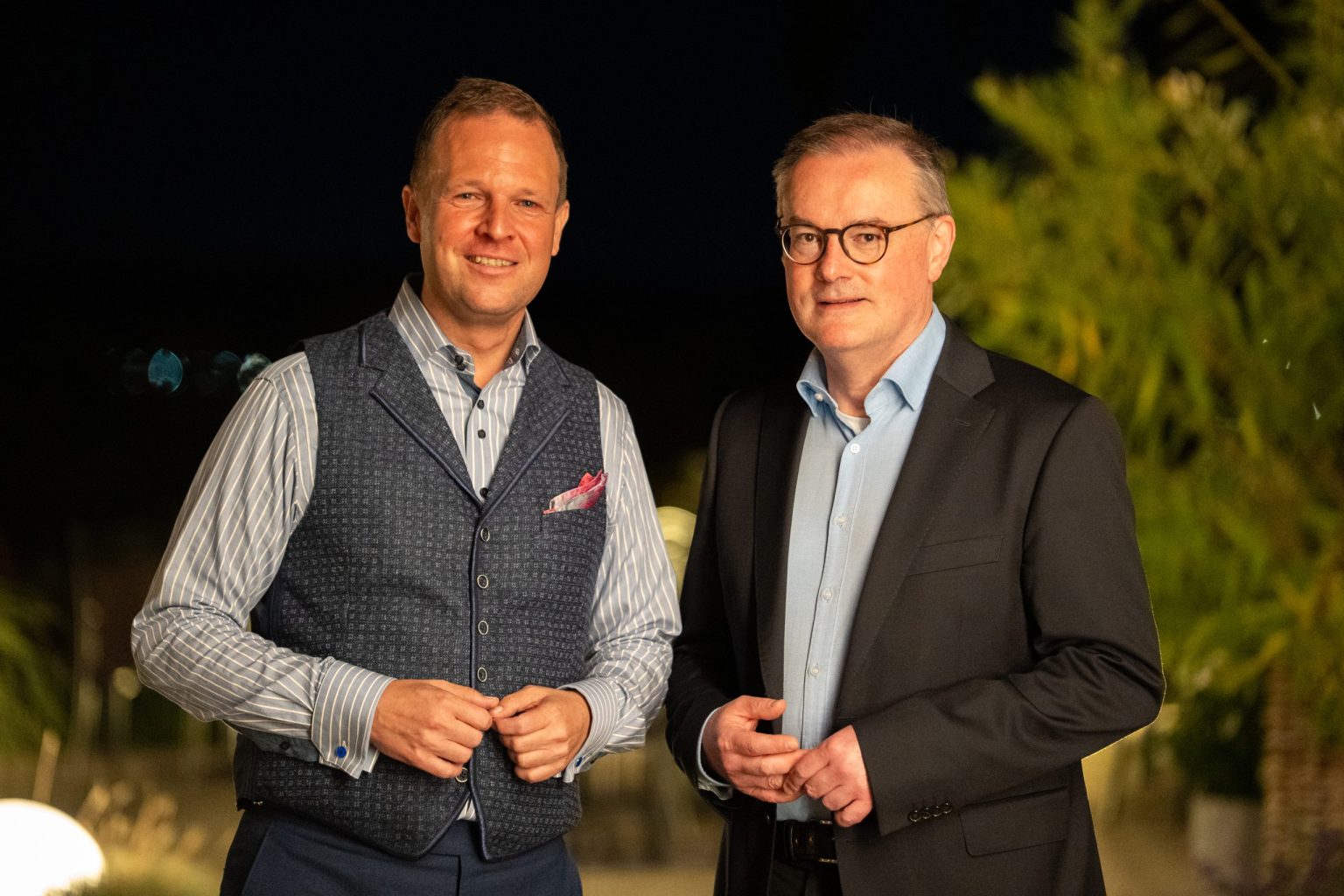
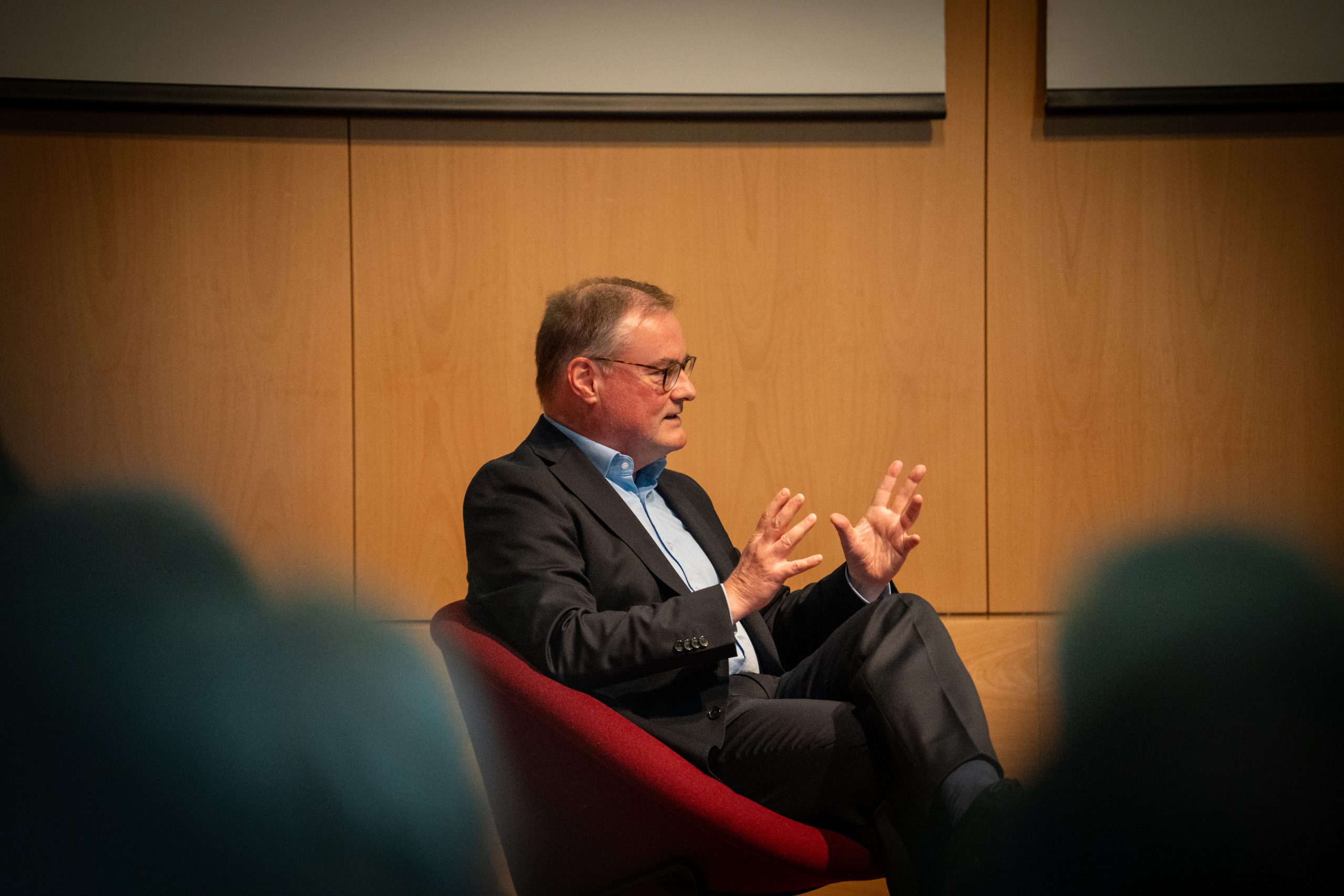
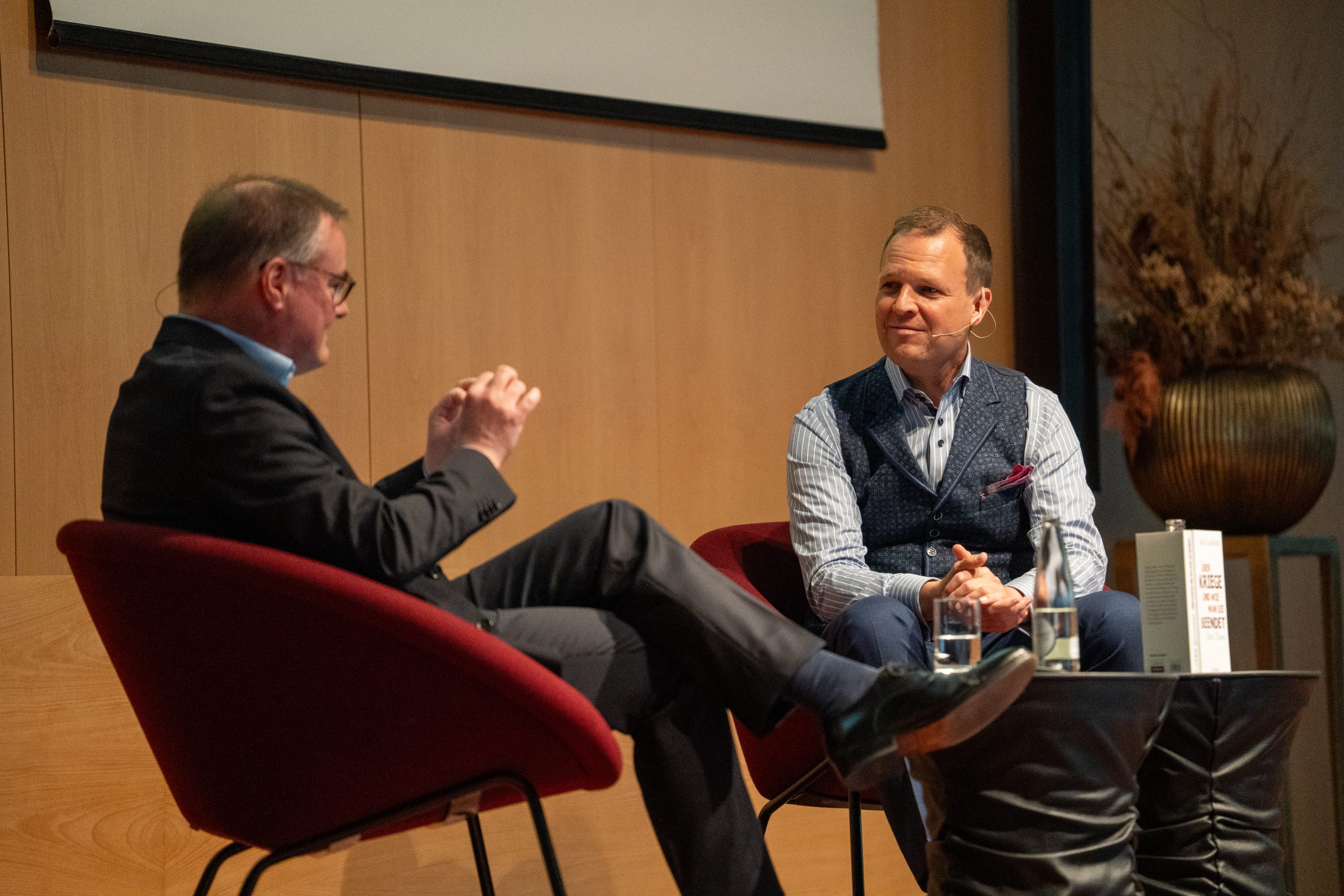
Few questions are as pressing today as this one: How do we actually achieve peace? Last night, Professor Dr. Jörn Leonhard, historian at the University of Freiburg and one of the most distinguished war and peace researchers in the German-speaking world, attempted to answer this question, moderated by Christoph Lanter. A packed hall, a profound presentation, and a discussion that resonated long afterward.
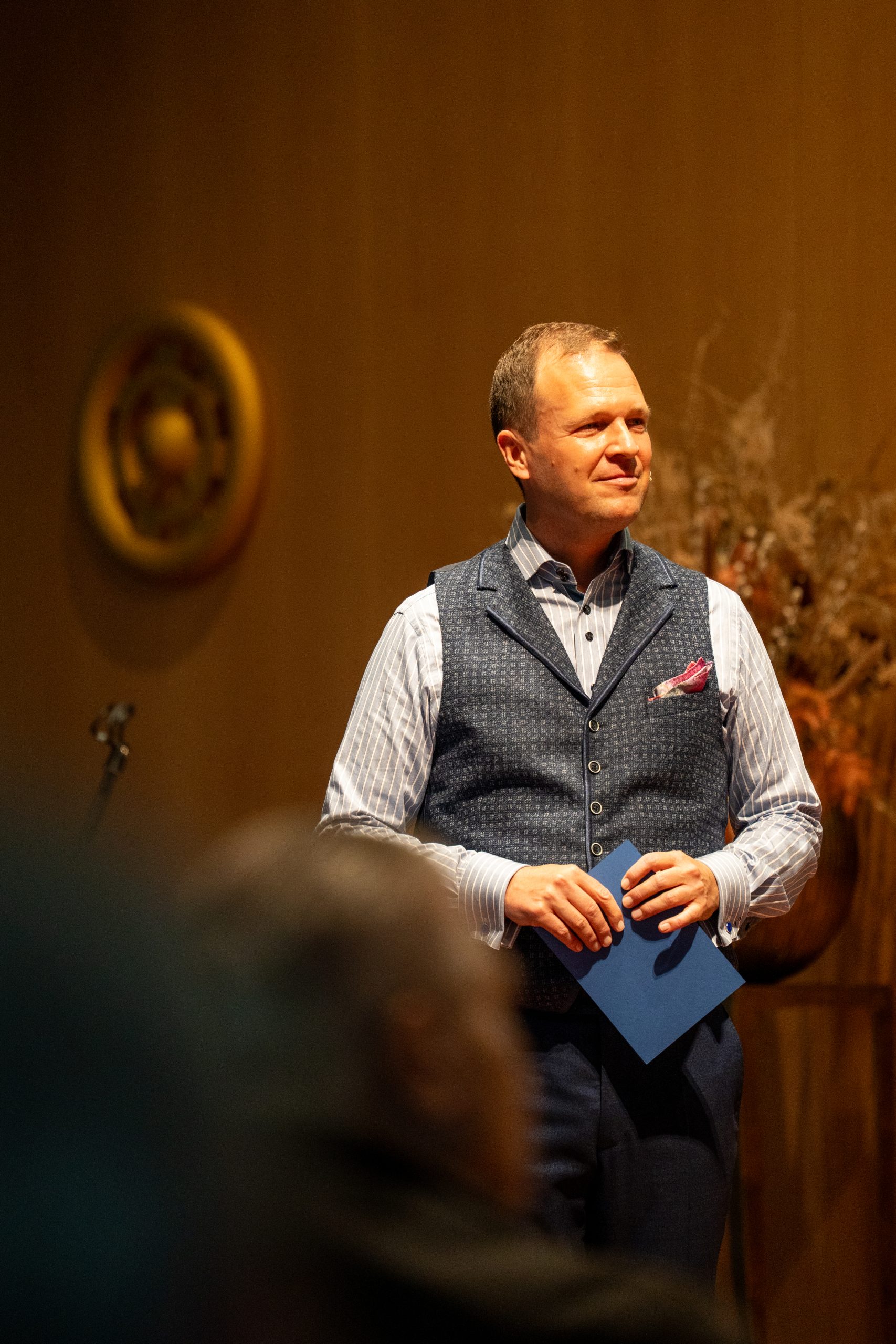
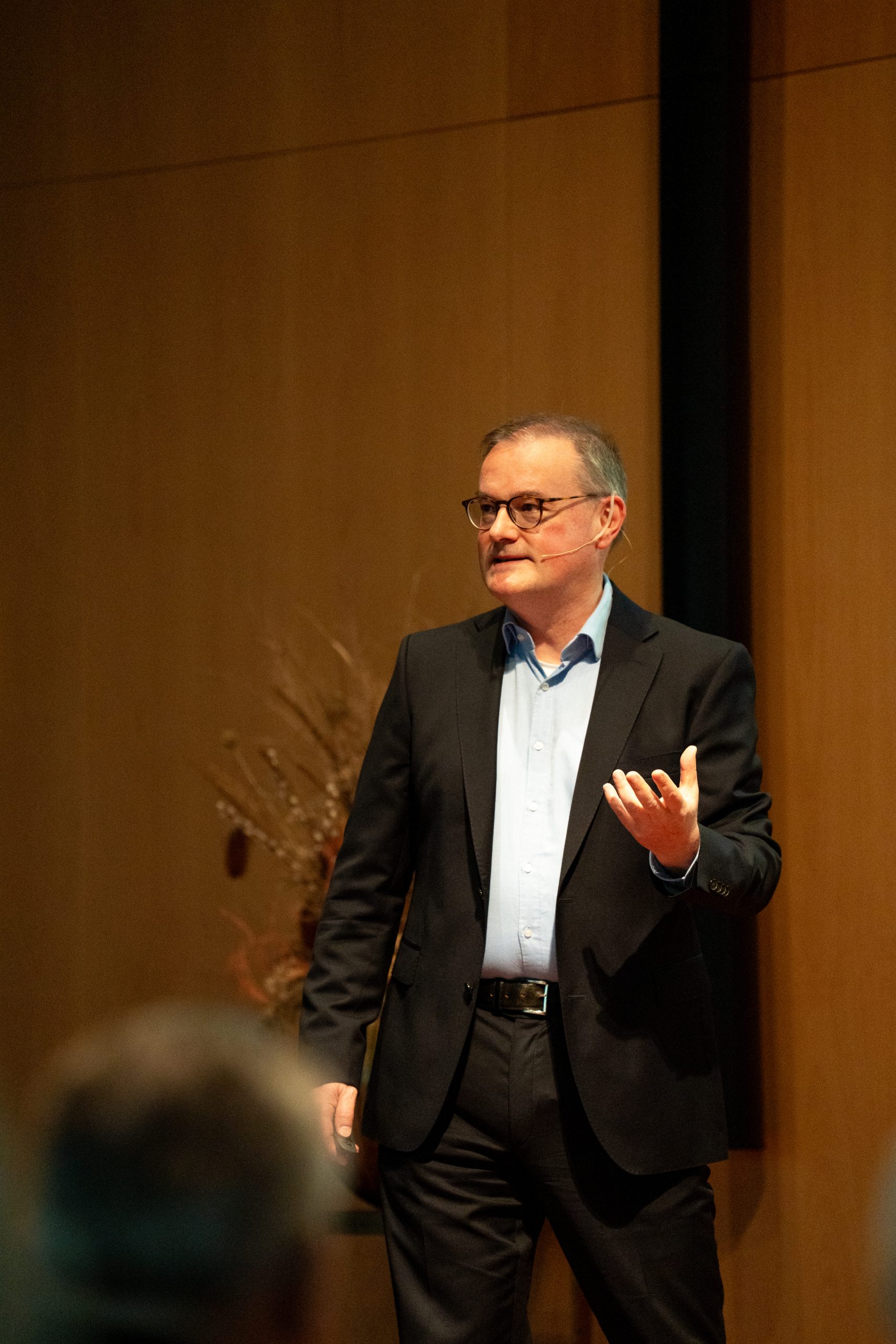
Leonhard's central message right from the start: We usually know the beginnings of wars very precisely; we can name them with dates, assassinations, and gunshots. But when a war truly ends, when a ceasefire becomes genuine peace, can hardly ever be determined by a single symbol. This very transition—intertwined, delayed, and repeatedly interrupted—was the focus of the evening.
The nature of war determines its end
His first thesis: A war between monarchs ends differently than a civil war, a civil war differently than a world war. The situation is complicated by the fact that most long wars, including the war in Ukraine, are no longer purely categorized but rather hybrid forms: a war between states, a war for national self-determination, a media war, an economic war, and an energy war all at once. Anyone who wants to understand how such a war can end must first understand what kind of war it actually is.
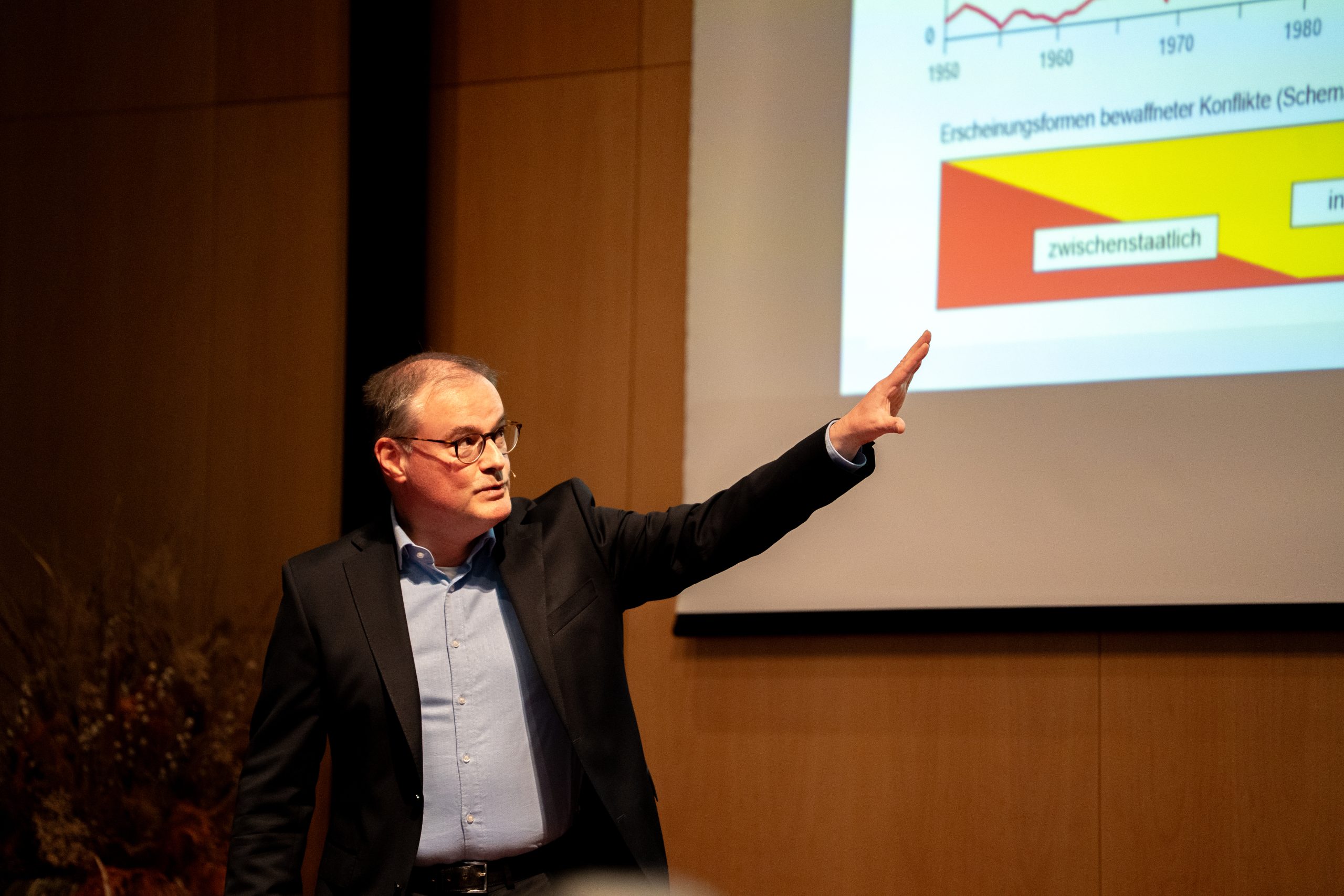
According to Leonhard, since 1945 fewer and fewer wars have ended with classic international peace treaties. More often, only fragile ceasefires remain, which are broken at every opportunity. Classic interstate wars have become less frequent, but civil wars and, since the 1990s, hybrid wars have increased enormously: conflicts in which crime, terrorism, and ethnic violence are hardly distinguishable anymore, and in which international law reaches its limits.
What peace actually means
Particularly striking was Leonhard's retrospective on how the concept of peace itself has become increasingly charged with meaning over the centuries. In antiquity, peace initially meant simply the absence of violence. With Christianity, the idea of closeness to God was added. With the end of the religious wars and the emergence of modern international law, notably the Peace of Westphalia, the path from war to peace became increasingly formalized through legal means—a process that later included the Geneva Conventions and the International Committee of the Red Cross. In the 19th century, the idea arose that democracies were more peaceful among themselves, a notion that continues to resonate today. And finally, after the First World War, came the fourth major revaluation: peace, according to the new conviction, also requires justice, the recognition of victims, and the prosecution of perpetrators.
The real work on peace begins the moment the ink on the document is still wet.
Jörn Leonhard, quoted by Jan Smuts
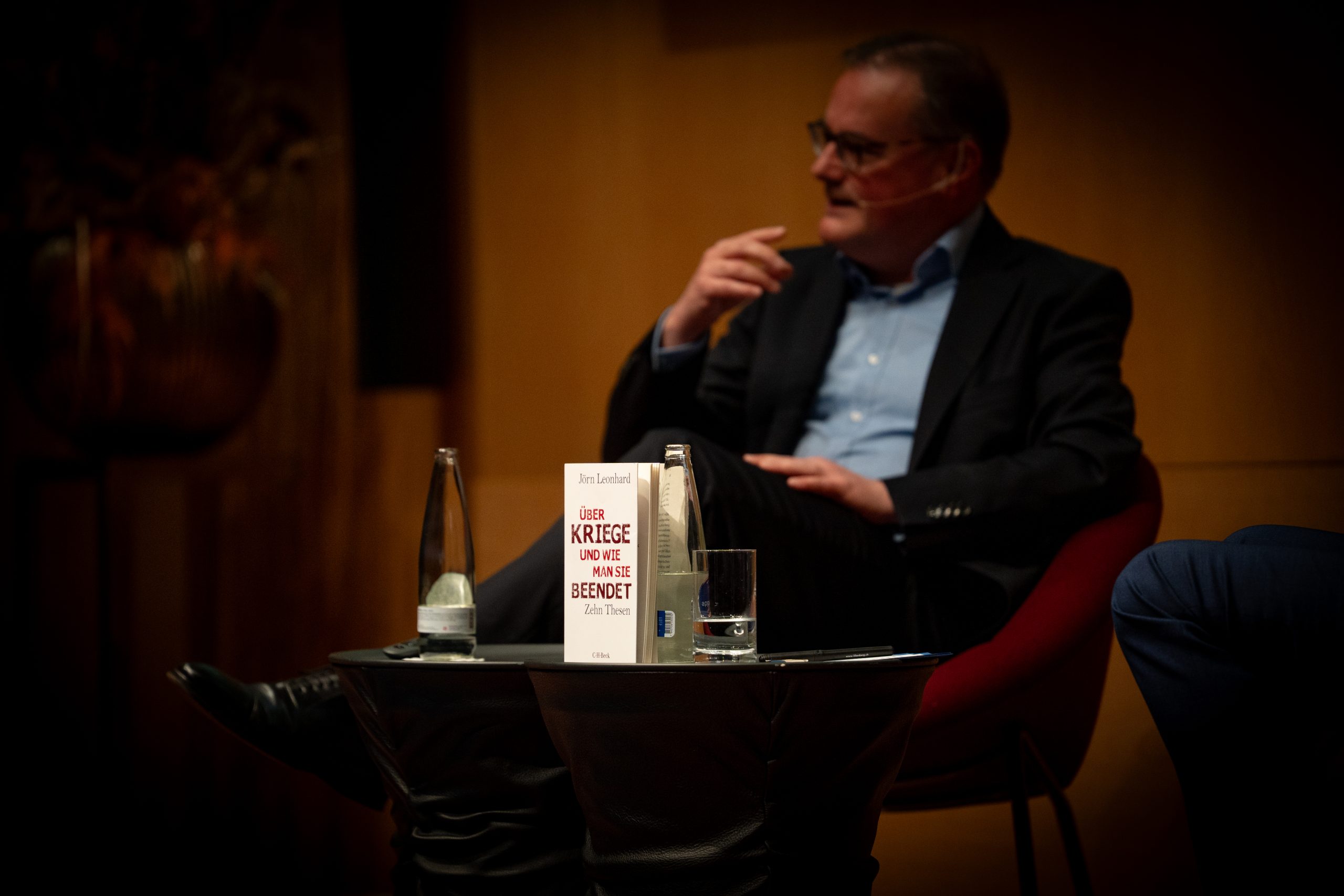
Without communication, there is no peace.
Perhaps the most important thesis of the evening: There is no peace without communication. Leonhard, drawing on the work of sociologist Niklas Luhmann, distinguished between two forms of trust. Personal trust, meaning the knowledge of which specific people one is speaking with and whether they actually have decision-making power. And systemic trust, the trust in institutions like the UN or the OECD, even if these are often considered toothless, because they possess communication channels that can make all the difference at a crucial moment.
Crucially, credible mediators are essential, especially those who remain committed to a region even after a peace agreement and ensure that agreements are actually implemented, as the US demonstrated with the Marshall Plan after 1945. And then there's something else that doesn't need much explanation in Switzerland: the location itself. International neutrality, a central location, a functioning railway, a welcoming hotel industry – all of this has made Switzerland a preferred negotiating location since the 19th century, because all parties involved know that it has no territorial interests of its own.
And sometimes it is precisely the seemingly trivial things that make the difference: a shared meal, a boat trip, a glass of vodka between negotiating partners. It used to be said that the Congress of Vienna danced but didn't move forward. Today we know that it was precisely these balls and receptions that were the place where, outside of diplomatic etiquette, the real talks took place.
The lazy and the overwhelmed peace
Two terms from Leonhard's own work shaped the rest of the evening. The first was the "rotten peace": a peace concluded asymmetrically between a stronger and a weaker actor, demanding concessions in the process. Historically, Leonhard argued, this has often been an invitation to the aggressor to continue at the next opportunity. With regard to Ukraine, this means that a solution that comes at the expense of territorial integrity risks merely freezing the war, providing a respite for rearmament. A sustainable peace, on the other hand, requires a Ukraine strong enough to defend itself, even if this will ultimately cost the Europeans dearly.
The second concept: the overstretched peace, that of Versailles in 1919, which believed it could solve all problems at once with a word like self-determination. The result was disillusionment, and disillusionment can quickly breed new violence. Successful peace policy therefore requires intelligent expectation management: a sense of what can be resolved now, what only in ten years, and what perhaps only a new generation of politicians can clarify. The German-German Two Plus Four Agreement of 1990 was a good example of this: what could be resolved was addressed, and the rest was deliberately postponed to the future.
What history means for the present
Leonhard repeatedly emphasized the value and limitations of historical comparison: While comparison is permissible, it is not the same as equating. He argued that one can gain deeper insights by examining the differences, rather than by asserting analogies. He cited the comparison between the AfD and the NSDAP as an example, a comparison he is currently confronted with almost weekly. His response: There is no territorial revisionism, no stab-in-the-back myth, no general staff using a political party, and the separation of powers remains functional. However, he asserted that a subjective feeling of belonging to the losers of societal upheavals, then as now, certainly exists, and this very sentiment deserves to be taken seriously, without equating the historical situations.
Leonhard was cautious in his assessment of the current situation in Ukraine: At the moment, both sides still expect to gain more from a continuation of the war than from a political solution, partly because Russia has historically traditionally relied on time and space. At the same time, he noted that from a historical perspective, it was remarkable how structurally resilient Ukraine's defensive position had proven to be—a "laboratory of 21st-century warfare," as security experts call it. Economic sanctions, he added, have historically had an effect, but rarely as one might hope: war economies are surprisingly adaptable; even Napoleon's Continental System ultimately failed due to smuggling.
War, Peace and Artificial Intelligence
When asked what artificial intelligence means for warfare, Leonhard, speaking as a historian, replied: The history of warfare is full of moments when a new technology seemed to change everything, from firearms to artillery to the atomic bomb, and yet each of these upheavals is ultimately embraced and further developed by both sides – a perpetual game of hare and tortoise. However, AI-driven attacks on critical infrastructure make the very distinction between war and peace more complex and new: For many commanders, this boundary hardly exists in its classical form anymore; it is now simply a question of escalation or de-escalation.
No determinism: History can be shaped.
At the end of his lecture, Leonhard became personal. He said there was a phrase historians constantly had to defend themselves against: "What will be, will be." He tried to convey precisely the opposite to his students. In 1933, not only did Adolf Hitler come to power, but Franklin D. Roosevelt also became American president that same year and, with the New Deal, found a different answer to the same crisis. History doesn't proceed in a straight line of progress or decline, but in waves, and waves mean that people can learn. The young diplomats who witnessed the failure of the Treaty of Versailles in 1919, such as Jean Monnet and Robert Schuman, were the ones who laid the foundations for European integration after 1945. Such learning processes take time, sometimes an entire generation, but they do happen.
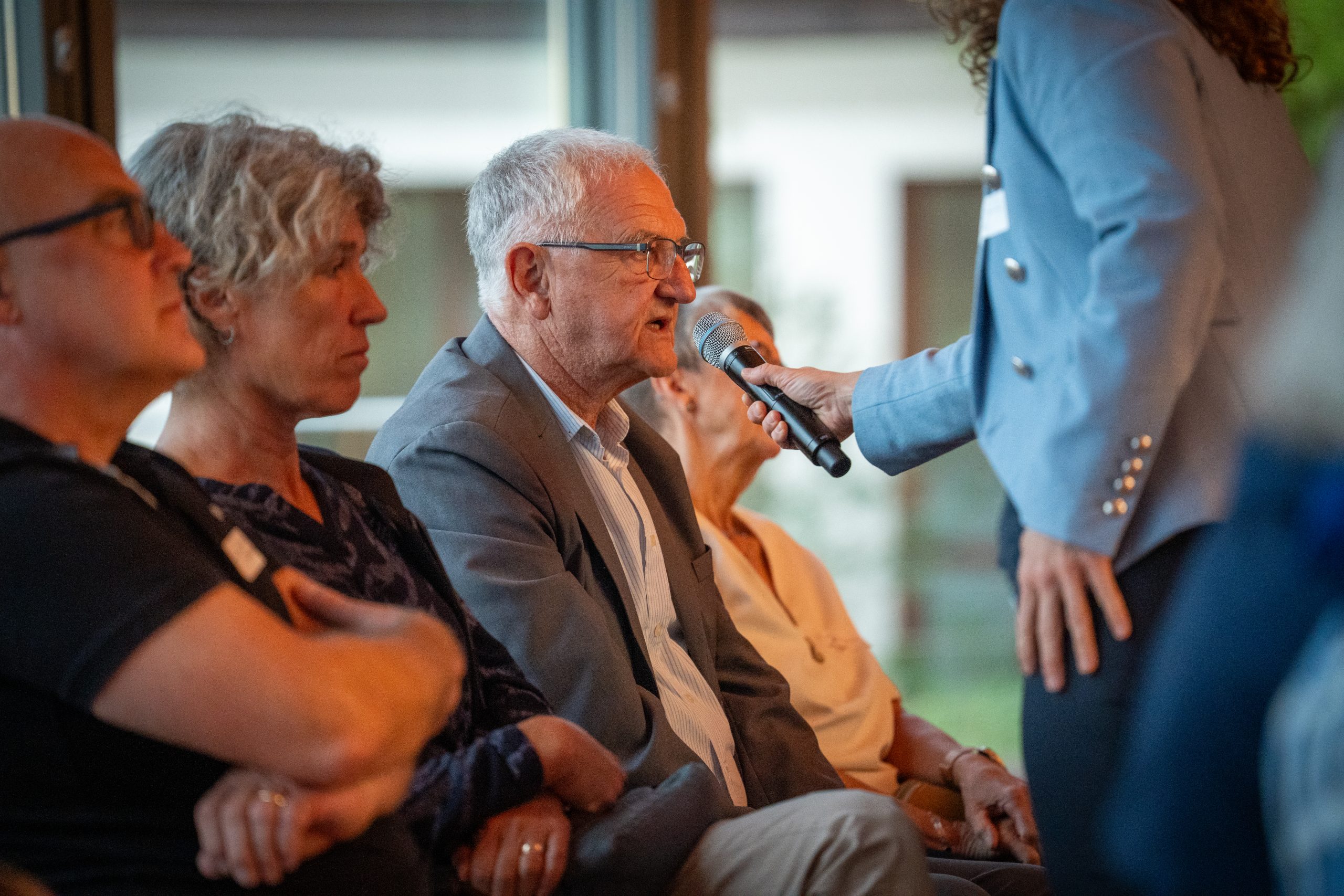
This sober, but not alarmist, attitude permeated the subsequent lively question-and-answer session. One audience member wanted to know whether, given the many wars without formal peace treaties, negotiations were still necessary. Leonhard's answer: absolutely, because even where only a fragile ceasefire is ultimately achieved, negotiations create a minimum of trust that later makes humanitarian progress, such as prisoner exchanges, possible in the first place. Another question revolved around the tension between justice and peace: whether the modern focus on perpetrators and victims doesn't sometimes allow war to live on in people's minds. Here, too, Leonhard remained nuanced: the argument has merit, as seen in Serbia after the first war crimes trials, but there is no going back from the modern understanding of peace as justice. The only important thing, he said, is to be aware of how much time and how many generations such a process can take.
In closing, Christoph Lanter thanked Jörn Leonhard for a substantive evening and offered a preview of upcoming Lilienberg events: In October, Mahbube Ibrahimi, recipient of the 2025 Prix Courage, will speak about her life; in November, a conversation with philosopher Peter Sloterdijk will follow; and further breakfast-style events on current topics such as artificial intelligence are planned. The evening concluded with a convivial reception and dinner in the lounge, where the discussions of the previous two hours continued in a smaller group.
Coming soon to Lilienberg
Personally asked: Mahbube Ibrahimi →
The first podcast talk of our new format: Mahbube Ibrahimi, recipient of the Prix Courage 2025, talks about her life and her work for «Wild Flower».
AI tools for everyday work: Gemini Notebook →
The next breakfast talk: Janic Geiser shows how the Gemini Notebook can be used in everyday office life.